
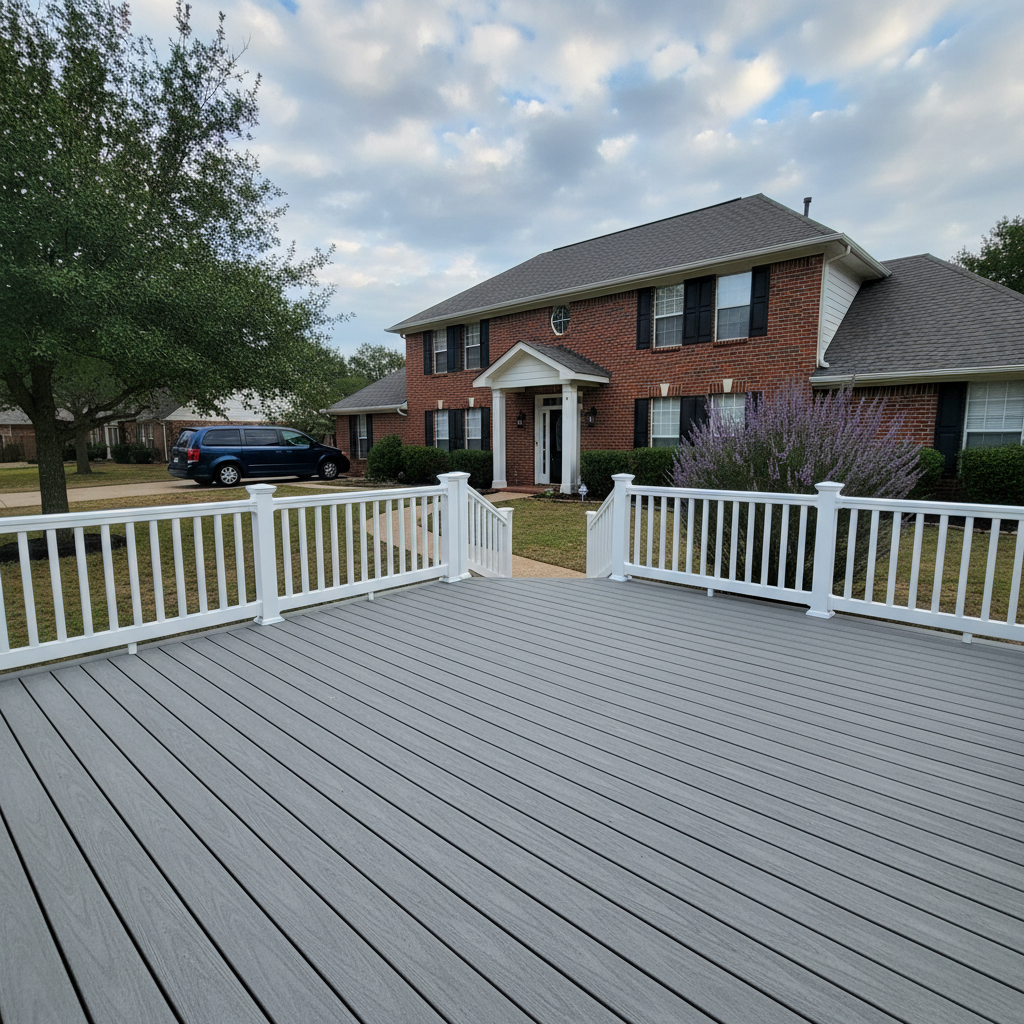
Picking a deck builder isn't like picking a lawn service. A bad deck doesn't just look wrong, it can fail, and when it fails it's usually the railing or the ledger board that goes, which means somebody gets hurt. Before you sign anything, it helps to know what separates a builder who does this right from one who's just good at selling.
The soil under the deck matters more than the lumber on top of it
Most of Irving sits on Blackland Prairie clay, the same expansive clay that runs through a lot of North Texas. That clay swells when it's wet and shrinks hard when it dries out, sometimes by an inch or more in a bad summer. If a builder sets deck posts on footings that are too shallow, or just pours a surface pad and calls it good, you'll see it in two or three years as posts that heave, lean, or pull away from the ledger board. A footing that's going to hold needs to go below the active zone where that clay moves, usually 24 to 36 inches depending on the spot and the load, and it needs a proper bell or at least straight sides so the concrete has something to grip.
Ask how deep they're going and why. If the answer is "however deep the auger digs easy," that's not an answer.
Permits aren't optional, and skipping them costs you later
The City of Irving requires a permit for most deck work, and that includes a lot of jobs homeowners assume are too small to bother with. Anything attached to the house, anything over a certain height off grade, and any structural framing work typically needs one. The inspector usually wants to see the footings before concrete goes in, and then a framing inspection before the decking boards cover everything up. A builder who tells you permits are a waste of time and money is telling you they don't want an inspector looking at their footings. That should worry you, not relieve you.
It also matters at resale. An unpermitted deck addition can hold up a sale or get flagged by a buyer's inspector, and you'll be the one explaining it, not the builder who's long gone.
What a real contract looks like
A one-page quote with a total price and nothing else is a red flag. A contract worth signing spells out the lumber species or composite brand, the fastener type, joist spacing, footing depth, who's pulling the permit, and a payment schedule tied to milestones, not one big deposit up front. Thirty percent down is normal. Seventy-five percent down before a single post hole is dug is not.
- Ledger board attachment should be lag-bolted or through-bolted into the rim joist or framing, never just nailed, and it needs flashing to keep water from rotting the house band board behind it.
- Joist spacing for most residential decks runs 16 inches on center, tighter at 12 inches if you're running composite decking at an angle or want a stiffer feel underfoot.
- Railing posts need to be through-bolted too, not just toe-screwed into the rim joist. A railing that wiggles when you lean on it is a liability, not a style choice.
Wood or composite, and why our summers push people toward composite
Pressure-treated pine is still the cheapest way to frame and deck a project, and it's fine as long as it gets sealed. Irving summers run well into the high 90s and past 100 in July and August, and that heat pulls moisture out of untreated wood fast, which is what causes cupping and splitting. A wood deck here needs staining and sealing roughly every one to two years, more often on the south and west sides that take full sun all afternoon.
Composite decking costs more up front, sometimes close to double the material cost of pressure-treated lumber, but it doesn't need that sealing cycle and it handles our humidity swings from spring storm season into dry August without warping the way real wood can. It still needs proper ventilation underneath, because trapped moisture against composite boards in a humid Texas summer can cause mold on the underside even though the top surface looks fine.
Neither choice is wrong. What's wrong is a builder who doesn't ask about your sun exposure and maintenance habits before recommending one over the other.
Walk away from these
No certificate of insurance, or a hesitation when you ask for one. Liability coverage protects you if a worker gets hurt on your property or if something goes wrong structurally down the line.
No mention of a permit on a job that clearly needs one.
A quote that's dramatically lower than every other bid you got. Decking lumber, footing concrete, and joist hangers cost roughly the same no matter who's buying them. If one bid is 40% below the others, something's being cut, and it's usually the part you can't see once the boards go down.
A builder who can't tell you the difference between a ledger-attached deck and a freestanding one, or doesn't ask about your home's age. Older Irving neighborhoods like Plymouth Park or Cherry Park often have homes built in the 1950s and 60s, where the original rim joist or foundation ledge wasn't built with a deck attachment in mind, which changes how the connection needs to be done. Newer subdivisions out toward Las Colinas or north near 161 tend to have more HOA rules about deck height, railing style, and even stain color, so a builder working there should be asking about your HOA paperwork before design even starts.
What to ask before you sign
Ask how long the footings need to cure before framing starts, usually a minimum of a few days depending on weather, and how long after that before the deck can handle full weight and furniture. Ask who pulls the permit and schedules inspections, you or them. Ask what happens if an inspector fails the framing and what that does to the timeline and price. A builder who answers these without hesitation has done this enough times to know the real answers. One who gets vague is guessing, and you don't want them guessing on your footings.
If you want to see how we handle footing depth, permitting, and material choices on actual jobs around Irving, take a look at our deck builder work and ask us the same questions you'd ask anyone else. The right answers shouldn't be hard to find.